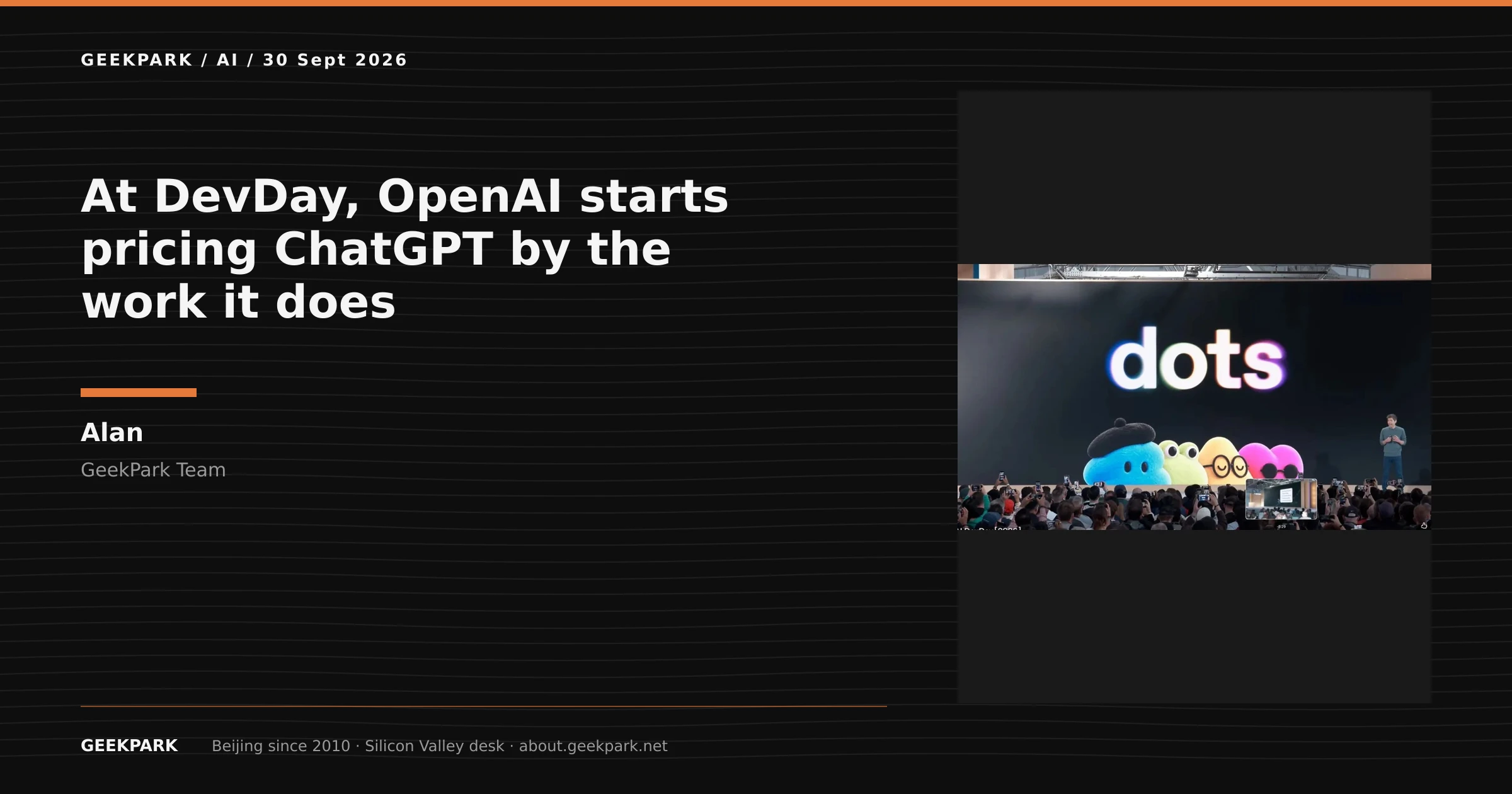
We ran a DevDay watch party in Palo Alto today. Most people came for a new model. The complaints we heard most were about pricing.
The room in San Francisco felt the same way. When Sam Altman got to the ChatGPT Pro changes, nobody clapped. OpenAI listed 25 launches on its recap page, and that silence explained the day better than any of them. ChatGPT is no longer priced like a chat app. It's priced like an employee, by how much work gets done and how fast.

Tibo Sottiaux posted the new multipliers about two hours before the keynote. Plus is 1x. Pro 100 is 5x, the reopened Pro 200 is 10x, and the new Pro 500 is 25x. Divide by the monthly price and every tier lands at the same rate: $20 buys one Plus-worth of usage. The old Pro 200 gave 20x for $200. That bulk discount is gone, and existing subscribers lose it on October 29.

The old rate was a subsidy for the heaviest users, and on ChatGPT the heaviest users are developers. Tibo said Responses API token traffic is up 100x from a year ago. A company with that much demand has little reason to keep rewarding whoever uses the most, and a flat $20 unit means nobody gets rewarded for volume anymore.
OpenAI says the reason is that models have gotten more efficient.
The efficiency is real. In the same keynote OpenAI shipped GPT-6.1 Sol, which it says comes close to Astra at a fifth of Astra's API price, and cut GPT-6 Sol and Luna to half price. None of those savings reach the Pro 200 subscriber. By Tibo's own math, the new Pro 200 is worth about half the old one in API spend. Models got cheaper and the allowance got cut in half, which only adds up if what you're buying is work, not tokens. OpenAI is keeping the difference as margin. Sol was also the only new model on the list. GPT-6.1 Astra, shelved on Monday after failing internal safety testing, was not among them.
Speed now has its own price. Astra Ultrafast is the same model on faster serving, up to 300 tokens per second. That's up to 8x standard speed in Codex and up to 6x in the API. The API price is 6x standard, so output goes from $50 to $300 per million tokens and input from $10 to $60. Inside ChatGPT, Ultrafast burns allowance 8x faster, and only Pro 500 and enterprise plans get it.

Line those up and speed gets more expensive the more of it you buy. Astra's existing Fast mode charges 2x for 2.5x the speed, about 0.8x per unit of speed. Ultrafast in the API is at least 1x per unit. In ChatGPT it's exactly 1x: 8x the speed, 8x the allowance. The person Pro 500 is built for is someone whose waiting time costs more than $500 a month.
The product this pricing is built for is dots. Each dot runs on GPT-6 Astra with its own cloud computer and browser, connects to 4,000+ apps, and works around the clock from ChatGPT, Slack or Teams. You can call it on the phone while it works. Individuals need Pro, starting at $100. The first dot is included and chatting with it is free, but sending it to work in ChatGPT Work or Codex draws from your allowance.

A dot is the first ChatGPT product designed to spend your allowance while you're asleep. The first one costs nothing to hire. Every hour it works comes out of the same pool the new tiers just shrank.
Back in Palo Alto, the missing model kept coming up. Some people wanted stronger math and algorithm reasoning and got consumer features instead. One attendee who does math-heavy research said his code calls a commercially licensed optimization solver. Local Codex can run and test it. Cloud Codex may not have the tool or the license, and having AI rewrite the solver isn't realistic yet. Manus shipped 2.0 the day before with a similar pitch, a personal assistant plus a cloud computer, and a few people said the assistants are starting to look alike.
Tibo said that once you set up the new cloud Codex environment, you won't go back to developing on your laptop. From OpenAI's side that makes sense. Work that runs on OpenAI's computers is work OpenAI can meter, and the new price list depends on metering. The solver on that researcher's laptop sits outside the meter, and so does its license.

The other half of DevDay was distribution. OpenAI says developers can now build native experiences for ChatGPT's 1.2 billion users: sidebar apps, interactive panels, viewers for their own file formats, triggers that fire when something changes in a connected app. Tibo added the line that matters most. ChatGPT will recommend relevant extensions inside conversations. Developers get the reach, and OpenAI decides who gets recommended.
Sign in with ChatGPT shares only name, email and avatar with partners. Plus and Pro users can also spend their own plan allowance inside 16 partner products in a limited preview, including Devin, Notion and Vercel. For enterprises, a new marketplace lets companies spend committed OpenAI credits on software from 32 launch partners like Adobe, Figma and Salesforce.
That turns the $20 unit into something close to a currency. Partners get users who arrive with a budget already attached. OpenAI sets the exchange rate, and it just showed it's willing to change that rate for its own subscribers overnight.
Anyone who has used WeChat will recognize the stack: mini programs surfaced in chat, a universal login, one wallet across apps.
One more detail. In May, Microsoft paused vibe coding after concluding the tokens cost more than the employees. By September, Microsoft employees' self-reported AI spend had a median of $300 a month. Pro 500 costs more than that.
Tibo said afterward that live demos suffered because everything shipped at once.